Exodus Wallet – 500 Words Detailed Explanation
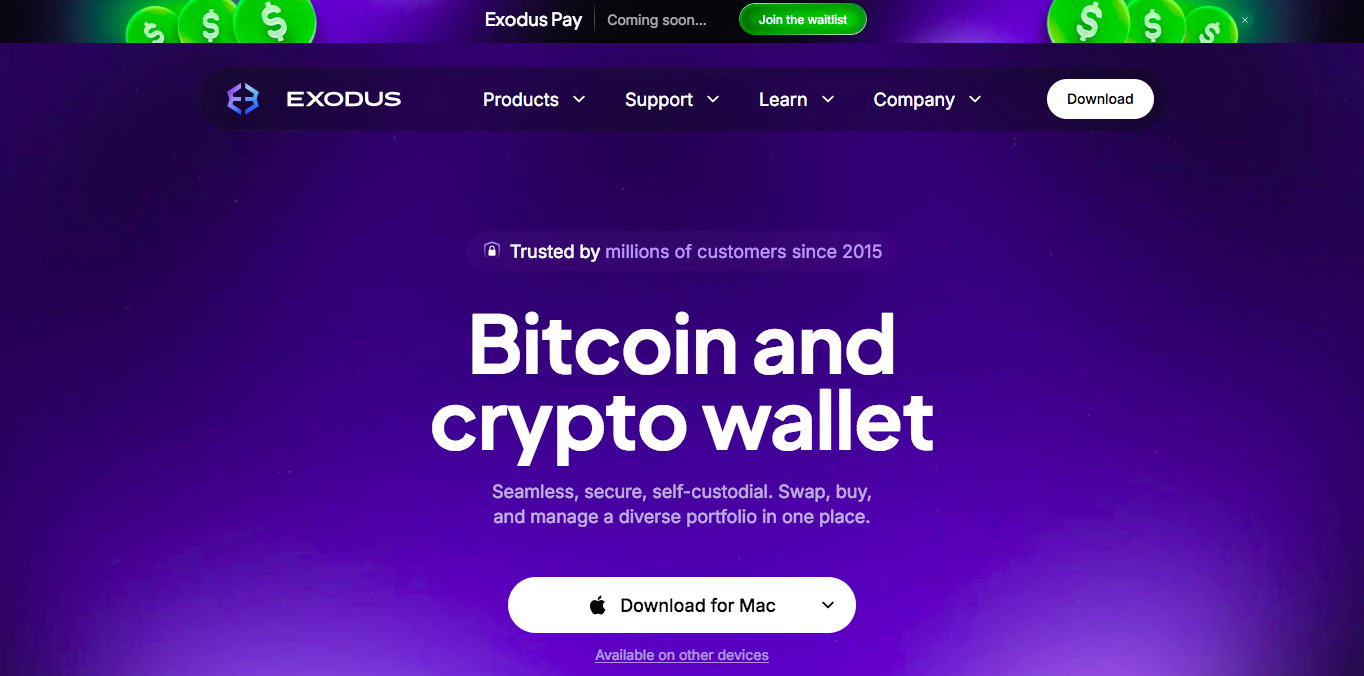
Exodus Wallet is a multi-cryptocurrency software wallet designed to provide users with a secure and user-friendly way to manage digital assets. Since its launch in 2015, Exodus has become one of the most recognized wallets in the crypto industry due to its intuitive design, built-in exchange features, and wide asset support. It is particularly popular among beginners and intermediate users who want a simple yet powerful solution for storing and managing cryptocurrencies.
Exodus is a non-custodial wallet, meaning users have complete control over their private keys and funds. Unlike centralized exchanges where assets are held by a third party, Exodus stores private keys locally on the user’s device. This ensures that only the wallet owner can access their funds. Because of this structure, users must take responsibility for securing their wallet and backup information.
The wallet supports hundreds of cryptocurrencies, including well-known assets such as Bitcoin (BTC), Ethereum (ETH), Solana (SOL), Cardano (ADA), Litecoin (LTC), and many ERC-20 tokens. This broad compatibility allows users to diversify their portfolios without needing multiple wallets. Exodus is available on desktop platforms (Windows, macOS, Linux) and mobile devices (iOS and Android), and it offers synchronization between devices for convenient access.
One of the most notable features of Exodus Wallet is its built-in exchange functionality. Users can swap one cryptocurrency for another directly within the wallet interface. For example, Bitcoin can be exchanged for Ethereum in just a few steps without transferring funds to an external exchange. This feature saves time and simplifies the trading process. However, the convenience may come with slightly higher fees compared to specialized trading platforms.
Exodus also provides staking support for selected cryptocurrencies. Staking allows users to earn rewards by participating in the operation and security of certain blockchain networks. Through the wallet interface, users can stake supported coins and monitor their rewards in real time. This feature is especially attractive to long-term investors who want to generate passive income from their holdings.
Security is a key focus of Exodus Wallet. During setup, users receive a 12-word recovery phrase, which is essential for restoring access to the wallet if the device is lost, stolen, or damaged. This recovery phrase must be stored securely offline and never shared with anyone. Exodus encrypts private keys and transaction data on the user’s device, adding another layer of protection.
For users who want enhanced security, Exodus integrates with the Trezor hardware wallet. This integration allows users to manage their assets using Exodus’ interface while keeping private keys stored offline on a Trezor device. Hardware wallets are widely considered one of the safest ways to store cryptocurrency, especially for larger investments.
In conclusion, Exodus Wallet combines ease of use, strong security features, wide cryptocurrency support, and convenient tools like built-in exchange and staking. It is an excellent choice for users who want full control over their digital assets without dealing with complicated technical processes. While it may not offer advanced trading tools for professional traders, it remains a reliable and accessible option for everyday cryptocurrency management.